


Presentació
En la sisena edició del Seminari INTO, que va tenir lloc l’octubre de 2009, es va analitzar de quina manera la globalització i els canvis en les tecnologies de la informació i les comunicacions han propiciat que siguin els mateixos consumidors turístics els que liderin les tendències del consum, decideixin el tipus de producte que desitgen, com el volen consumir, com volen comunicar les seves experiències…, la qual cosa ha provocat que l’empresari estigui a l’expectativa d’aquest canvi de comportament per adaptar el seu producte o servei a la demanda. En definitiva, el productor turístic ja no és qui controla el producte o la informació que vol fer arribar al client, com tampoc ho són els intermediaris.
En aquesta nova edició del Seminari INTO 2010 es proposa estudiar el comportament del sector turístic des de la generació de coneixement i la seva transferència procedent de l’àmbit acadèmic i centres de recerca cap al món empresarial. D’aquesta manera es completa l’anàlisi d’R+D+I sobre el canvi de comportament del sector.
Per aquest motiu, l’objectiu d’aquesta edició és comprovar com a través de l’experiència del coneixement i les solucions que ofereix la investigació s’impulsa un canvi real en el sector empresarial; un canvi necessari atesa la repercussió del poder de la demanda. Per això, el títol elegit per a aquesta edició és:
Turista, sostenibilitat i tecnologia.
Àmbits d’investigació per a la competitivitat turística
Si analitzam la competitivitat de les destinacions turístiques trobarem algunes definicions de diferents autors que la remarquen com “la capacitat d’una destinació per crear i integrar productes amb valor afegit que permeti suportar els recursos locals i conservar la seva posició de mercat respecte als seus competidors” (Hassan, 2000); Ritchie i Crouch (2000) la defineixen com “la capacitat d’un país per crear valors afegits i incrementar d’aquesta manera el benestar nacional mitjançant la gestió d’avantatges, processos atractius, agressivitat i proximitat, integrant les relacions entre aquests en un model econòmic i social”.
Per aconseguir l’objectiu del Seminari es compta amb la posada en marxa del CIDTUR (Centre de Recerca i Desenvolupament del Turisme) a les Illes Balears. L’objectiu estratègic de CIDTUR és convertir-se en l’agent que connecti necessitats de la destinació i del sector productiu, dins l’àmbit de nou coneixement, amb capacitats de l’entorn de la recerca per a la generació d’aquest coneixement sense renunciar, quan el moment ho requereixi, a crear o impulsar la creació de grups específics de recerca que completen el panorama nacional.
L’estudi desenvolupat pel CIDTUR per a l’elaboració del seu pla estratègic, així com l’anàlisi que ha dut a terme en el sector acoblant l’oferta en recerca amb les necessitats del sector empresarial, aporta els eixos per a l’estructura de les sessions del Seminari.
Per definir aquests eixos, CIDTUR va tenir en compte tres criteris: la tipologia de necessitats identificades en el sector, la coherència amb el Pla de Turisme Espanyol Horizonte 2020 i la coherència amb el Pla Nacional d’Investigació Científica, Desenvolupament en Innovació Tecnològica 2008-2011. Els cinc eixos definits són: els clients, la tecnologia, la sostenibilitat, el capital humà i la competitivitat.
Per desenvolupar el programa de sessions de conferències i taules rodones s’han triat els clients, la tecnologia i la sostenibilitat com els principals elements d’anàlisis, atès que considerarem la competitivitat intrínseca en cadascun. Aquests tres eixos es combinaran amb els tres principals àmbits d’actuació del sector: la distribució, la destinació i el producte.
Per representar la combinació de tots els elements esmentats, s’ha elaborat el següent quadre, en què el contingut de cadascun és la temàtica de la ponència o taula rodona per impartir en el seminari; també es creuen ponències acadèmiques amb bones pràctiques del sector empresarial:
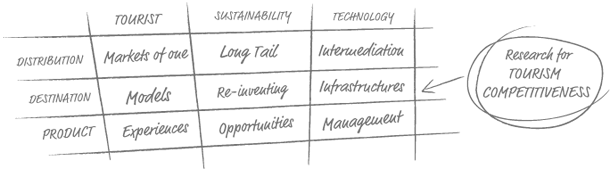
També s’introdueix una altra sessió imprescindible en aquest àmbit sobre " Sistemes de Finançament públic/privat per a la recerca": quines són les eines disponibles per poder invertir més i millor en recerca i transferència del coneixement.
Finalment, i a tall de conclusions del Seminari, CIDTUR moderarà la cinquena sessió amb el títol “La ciència per a la competitivitat”. Aquesta taula rodona pretén establir una agenda de propostes de generació de coneixement que permeti a una destinació recuperar la competitivitat, com el cas de les Balears.